


SOCIAL
PALLAS MANU WANDERING

CONTATTACI
© Copyright ©2022 All riserved by PallasManuWandering (Tn) Italy

Concept
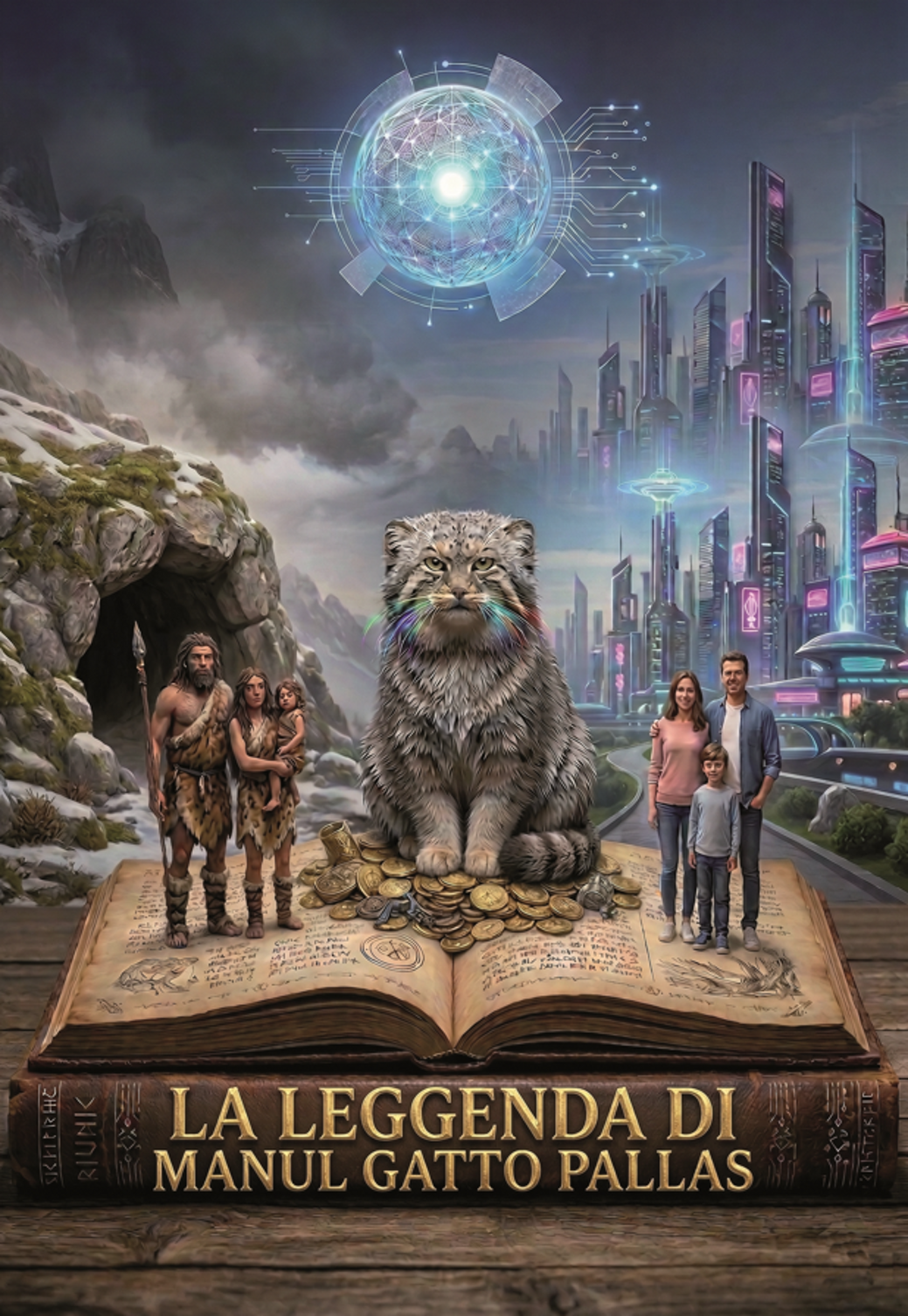
La Leggenda di Manul Gatto Pallas
The Legend of Manul Pallas
Cat
Concept del progetto editoriale
Publishing project concept
PALLAS MANU WANDERING



La Leggenda di Manul Gatto Pallas
The Legend of Manul
Pallas Cat
LA LEGGENDA DI MANUL GATTO PALLAS
Concept del progetto editoriale
L’era della violenza nel mondo globalizzato genera il conflitto tra antropocentrismo e biocentrismo/simbiocene. La mobilitazione collettiva si annuncia come opportunità per la risoluzione, oggi più che mai da cogliere per affrontare la domanda:
****
CHE FINE HA FATTO IL FUTURO?
Homo Sapiens ha perso il senso del tempo, ciò che conta è confinato nel momento. La tirannia del presente ha oscurato gli insegnamenti del passato e nel contempo il desiderio di immaginare il futuro. La specie umana si è evoluta anche grazie alla capacità di trasformare l’ignoto in opportunità. Mancando la percezione del cambiamento climatico e la gravità dell’emergenza, l’umanità non reagisce e prevale l’irresponsabilità nei confronti dell’ecosistema. Innegabile il problema di comunicazione tra la comunità scientifica e la popolazione non ricettiva. La narrazione interpreta il mondo e crea progetti all’avanguardia, reinventa la vita sul pianeta, risveglia il desiderio di immaginare il futuro.
Le vicende del libro “ La Leggenda di Manul Gatto Pallas “ si svolgono in tempi definiti, in realtà storiche in equilibrio tra la scienza e l’immaginazione. Il pregio del testo risiede nella coerenza tra i fatti e la narrazione emotiva. L’immagine è la scintilla del creativo, la narrativa è il vettore della scintilla per accendere il sapere collettivo. La lettura breve s’inserisce nel modello di scrittura innovativa, didattica collegata ai fattori culturali contemporanei. La mente elabora le informazioni che si consolidano a vicenda tramite i contenuti visivi e testuali. Il gemellaggio tra scienza e narrativa informa e diffonde, la letteratura di testo popolare ha valore educativo e culturale.
Anche un gatto fa cultura, influenza l’immaginario e diventato simbolo della biodiversità non si pone la domanda:
CHE FINE HA FATTO IL FUTURO?
Il gatto Pallas diventa guida e testimone, ci accompagna nel suo adattamento evolutivo nel corso delle ere, dei cambiamenti climatici e la biodiversità vulnerabile. L’opera esplora i suoi habitat naturali e quelli influenzati da Sapiens. Dalle vaste steppe agli ambienti antropizzati con presidi che sviluppano progetti di conservazione della natura e programmi di educazione ambientale. Sono aree protette- marine e territoriali-, zone speciali di protezione degli ecosistemi. La natura minacciata è protetta dall’interposizione umana con la realizzazione di habitat-spazi che ricreano l’ambiente naturale. Enti e Fondazioni operano su piani complementari a sostegno della Biodiversità , la fonte di vita sul pianeta. L’urbanizzazione inserita sul territorio a sua volta crea barriere fisiche, recinti di separazione tra le due realtà. L’antropocene è la forza geologica che privilegia la disconnessione con l’ambiente, tuttavia Sapiens protegge singole specie in bioparchi. In contrapposizione con l’inerzia di contrastare gli effetti del cambiamento climatico in situ, tramite azioni individuali e collettive. Scenario che, di fatto, esclude la reintroduzione in natura.
Sul pianeta ci sono oltre 6.000 zoo e acquari che attraggono oltre settecento milioni di visitatori. Si stima che l’interesse per le specie selvatiche, a livello globale, coinvolga miliardi di persone. Il gatto di Pallas è stato dichiarato simbolo della fauna selvatica nella contea di Taft in Iran, nel santuario di Shirkouh.
Si prospetta il cambiamento epocale capace di raggiungere l’equilibrio delle forme di vita che popolano la biosfera; come inizio non la visita e neppure il viaggio ma l’esplorazione dei bioparchi. L’immersione per comprendere la natura che contribuisce al nostro benessere fisico e mentale. Vivere l’ambiente in cui l’interazione è spontanea e favorisce la responsabilità ambientale per la crescita in un mondo armonico. La comunità coesa reagisce alla domanda “ Che fine ha fatto il futuro” e si rifiuta di lasciare in eredità alle nuove generazioni il futuro che paga i danni del passato.
www.pallasmanuwandering.it
THE LEGEND OF MANUL, THE PALLAS'S CAT E
Editorial Project Concept
The era of violence in the globalized world generates a conflict between anthropocentrism and biocentrism/the symbiocene. Collective mobilization emerges as an opportunity for resolution, which today more than ever must be seized to address the question:
****
WHAT HAPPENED TO THE FUTURE?
Homo Sapiens has lost the sense of time; what matters is confined to the moment. The tyranny of the present has obscured the lessons of the past and, at the same time, the desire to imagine the future. The human species has evolved partly thanks to its ability to transform the unknown into opportunity. Lacking the perception of climate change and the severity of the emergency, humanity fails to react, and irresponsibility towards the ecosystem prevails. The communication problem between the scientific community and an unreceptive population is undeniable. Storytelling interprets the world and creates avant-garde projects, reinvents life on the planet, and awakens the desire to imagine the future.
The events of the book "The Legend of Manul, the Pallas's Cat" take place in defined times, within historical realities balanced between science and imagination. The merit of the text lies in the coherence between facts and emotional narrative. The image is the spark of the creative; the narrative is the vector of the spark to ignite collective knowledge. The short reading format fits into an innovative writing model, a didactic approach connected to contemporary cultural factors. The mind processes information that is mutually consolidated through visual and textual content. The pairing of science and narrative informs and disseminates; popular literature holds educational and cultural value.
Even a cat creates culture, influences the collective imagination, and, having become a symbol of biodiversity, does not ask itself the question:
WHAT HAPPENED TO THE FUTURE?
The Pallas's cat becomes a guide and a witness, accompanying us through its evolutionary adaptation over the eras, climate changes, and vulnerable biodiversity. The work explores its natural habitats as well as those influenced by Sapiens. From the vast steppes to anthropized environments with outposts that develop nature conservation projects and environmental education programs. These are protected areas—marine and terrestrial—special zones for ecosystem protection. Threatened nature is protected by human intervention through the creation of habitat-spaces that recreate the natural environment. Institutions and Foundations operate on complementary levels to support Biodiversity, the source of life on the planet. Urbanization integrated into the territory, in turn, creates physical barriers, separation fences between the two realities.
The Anthropocene is the geological force that favors disconnection from the environment; nevertheless, Sapiens protects individual species in bioparks. This stands in contrast to the inertia of combating the effects of climate change in situ through individual and collective actions. A scenario that, in fact, excludes reintroduction into the wild.
On the planet, there are over 6,000 zoos and aquariums that attract over seven hundred million visitors. It is estimated that interest in wildlife globally involves billions of people. The Pallas's cat has been declared a symbol of wildlife in Taft County, Iran, within the Shirkouh sanctuary.
An epochal change is envisioned, capable of achieving an equilibrium among the life forms that populate the biosphere; starting not with a visit, nor even a journey, but with the exploration of bioparks. Immersion to understand the nature that contributes to our physical and mental well-being. Experiencing the environment in which interaction is spontaneous and fosters environmental responsibility for growth in a harmonious world. The cohesive community reacts to the question "What happened to the future?" and refuses to bequeath to new generations a future that pays for the damages of the past.
www.pallasmanuwandering.it
